Environmental sustainability in business – is it economical in the long run?
Updated: Sep 16, 2025

The environmental landscape of this world is fast-changing, and our planet is in ‘power-saving’ mode. As a result, more businesses are now committing themselves to conserving energy and resources to save our dying habitat. However, it begs the question: Does running an environmentally-friendly business have a greater impact on cost-efficiency?
We understand that when most business owners hear the word ‘eco-friendly’, they associate it with reduced profits and extra costs. However, the opposite is often true. Running an environmentally-aware business can often mean greater profitability in the long run.
Research shows that:
Businesses that create sustainability strategies are shown to outperform those that fail to adopt a positive attitude toward eco-friendly changes.
Companies that are actively planning for climate change receive an eighteen percent higher return on investment than those that don’t.
Corporations that choose to invest in carbon reductions attained a fifty percent lower volatility of earnings over the last ten years, as well as a 21% increase in dividends.
How to ‘go green’ and save on everyday costs
One of the easiest ways to start your journey towards sustainability is to recycle. Simply by separating recyclables and non-recyclables, you’ll quickly begin to notice a lot of reusable materials that would otherwise end up in the general waste bin. As an added bonus – mixed recycling bins are often collected at discounted prices to landfill waste.
Reducing the number of waste bags used will also help the environment. However, it’s important to measure rubbish bags by total weight used rather than quantity. To determine if you’re receiving good value, the cost should be measured by cents per litre of waste, rather than cents per bag.
For many companies, though, a large percentage of every waste bag purchased is not used. The bag is often too large for the bin, is only partially filled due to weight restrictions or is emptied daily regardless of how full the bag may be.
To remedy this, a simple calculation can be used to find out if you’re using more plastic than necessary:
Number of bags used per day
Length of the plastic bag
Volume of waste per bag
Thickness of the bag
Average % filling
This is important because the extensive use of plastic has created a real problem for our planet and is hazardous to humans and animals, too.
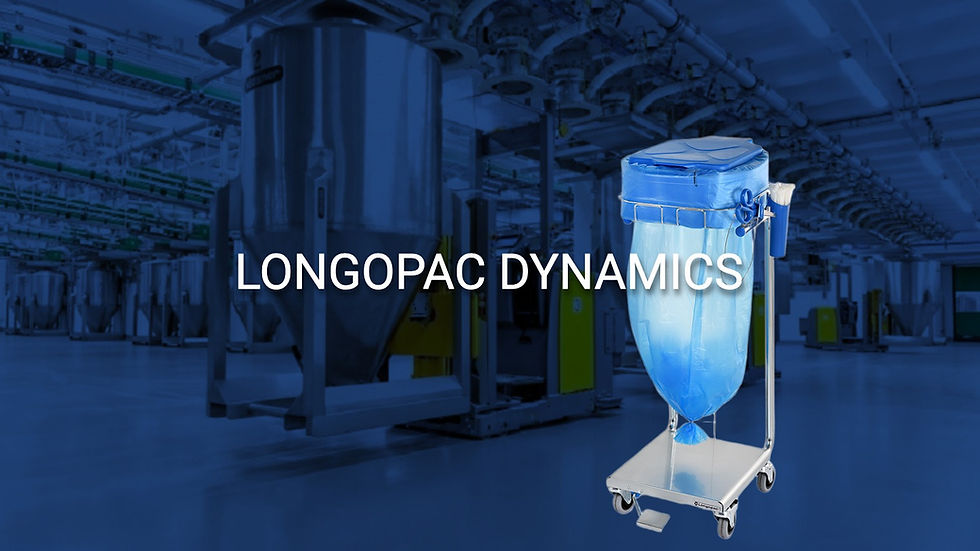
The solution? Reduce your footprint by adopting innovative, cutting-edge technology from Longopac.
Our bags are made from ultra-thin polyethylene material, which is half the thickness yet three times the strength of a traditional bag. This solution not only offers better functionality but, more importantly, it’s environmentally-friendly. A bag that lasts longer and is always 100% full, reduces your yearly consumption. It effectively proves to be more sustainable on nature and your budget.
Every Longopac bag is 100% Full, the average cost is 0.01 cents per litre of waste

On average Longopac uses 70% less plastic than a tradition waste bag.
Become an environmentally-friendly business
As you can see, if new innovation is embraced, the benefits to the environment and to your bottom line can be significant. Running an environmentally-friendly business is the responsible thing to do, and it will serve your business well in the long run. Contact us for more info.


Comments