The hidden cost of traditional bin liners
Updated: Mar 12

In commercial facilities, staff follow daily schedules to keep buildings clean and prevent bins from overflowing. That means bins are often changed while the liners are still only half full, because leaving them would risk them getting too full before the next scheduled changeover.
If you think about that at scale, how many bin liners does a company go through in a year?
Over a year, 200 bins spread across a five-storey office building, with two bin changes per day, results in roughly 104,000 bags being used. If even two-thirds of those bags are only half full when they’re tied off, the building is effectively throwing away the equivalent of more than 34,000 empty liners every year. At around 25 cents per liner, that’s over $8,000 spent on plastic that was never needed.
The operational costs of waste management get absorbed into the background noise of running a building. The unit price of a box of liners is low enough that no one scrutinises the price and usage of each bag, but when budgets matter, it's time to optimise processes and invest in long-term savings.

In clinical environments, the stakes are higher than simple inefficiency. Hospital waste bags, once opened and used, cannot be held over between rounds due to health and safety protocols. Sizing each bag precisely to the actual load isn't just operationally tidy in these settings; it’s the difference between a waste system that supports hygiene standards and one that creates unnecessary handling risk.
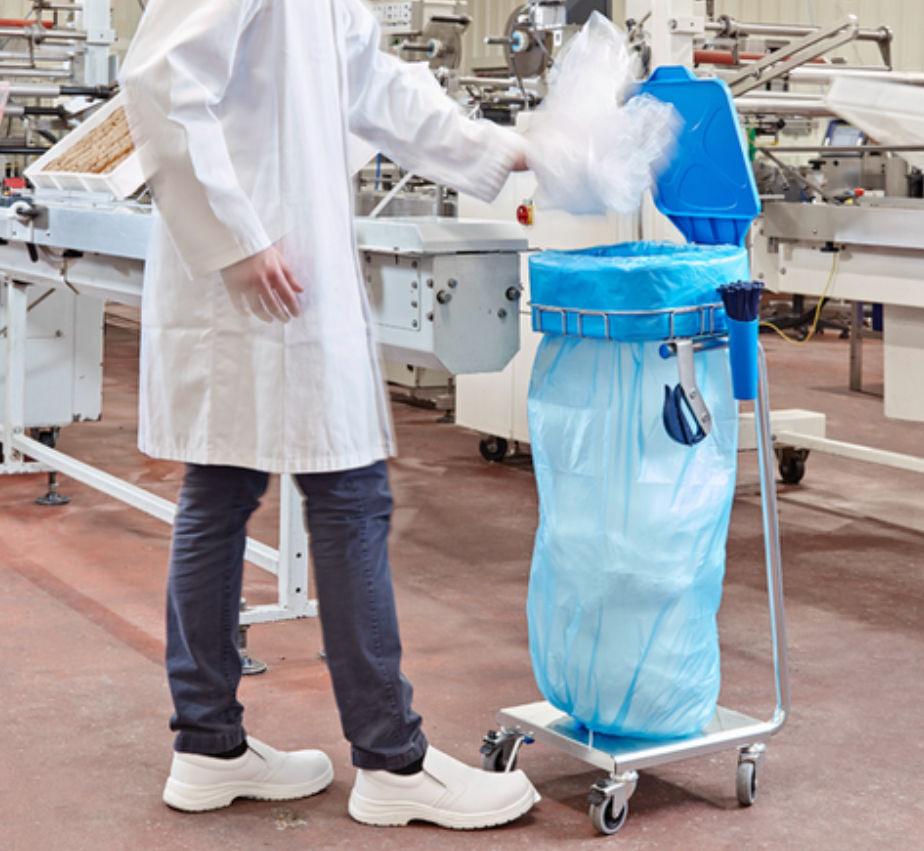
This is why more commercial sites are switching to the innovative Longopac system of bins and continuous liners. Rather than individually pre-cut bags, Longopac uses a continuous cassette of three-layer polyethylene liner material mounted directly to the bin. Staff pull down exactly the length required for the current load, tie it off at the bottom, cut it free, and the next bag is already in position.
In manufacturing environments, where waste volumes fluctuate considerably throughout the day, sizing each bag to the actual load reduces both plastic consumption and the physical strain of handling unnecessarily heavy bags.
In offices and public-facing areas, Operations and Sustainability Managers are choosing Unisort Climate Recycling Bins specifically designed to fit Longopac liners. Not only do they look great, but the system also keeps bins cleaner, reduces waste contact, and increases productivity by accelerating changeovers.
All up, greater efficiency, improved hygiene, less plastic use and reduced labour time benefit more than just financial savings. Businesses are becoming more aware and motivated to make meaningful improvements in their sustainability practices. Many now understand the value of upgrading their waste systems with Longopac and Unisort products.
At Easi Recycling, we are here to make that transition as easy and well-planned as possible. Call us on 0800 342 3177 or send us a quick email, and one of our friendly team members will help introduce a waste management plan that works for your site, at your own pace and within your budget.


Comments